Listening to Barrels: The Old Guard Story
By Michael Koratich, Bourbon Blenders
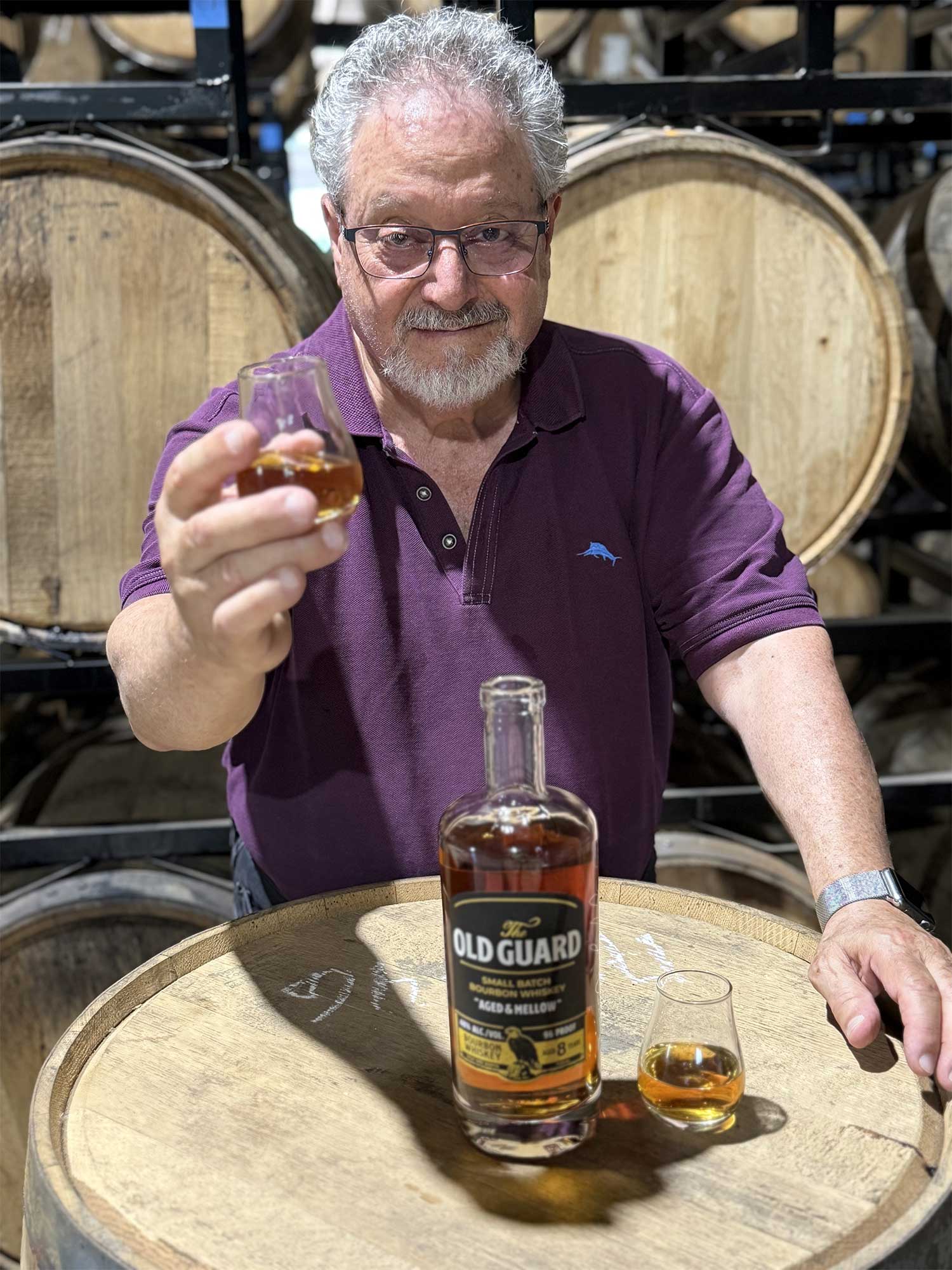
Some whiskey stories start with a brand concept. Others start with a business plan. The Old Guard starts with a man standing in a rickhouse, listening to barrels talk back.
“Poppy” Bruce Potash didn’t set out to build a legacy brand. He was retired, restless, and spending more and more time around whiskey. His wife noticed before he did. When she asked why he was suddenly deep into distilleries, classes, and late-night tastings, he told her he was researching a book. The problem was that he hadn’t started writing one. And because he doesn’t lie to his wife, he sat down and began putting words on the page. That moment set the tone for everything that came after. Straightforward. No shortcuts. No pretending.
The Old Guard name itself carries weight. The Army’s oldest regiment dates back to 1784, and the fact that no one had trademarked it still surprises him. For Poppy, the responsibility is clear. If the name is going on the bottle, the whiskey has to honor the history behind it. He talks about heritage openly. His grandfather was an Eastern European moonshiner. His father was a Prohibition-era bootlegger who hauled Canadian whiskey into Brooklyn. Two of his sons now work in the industry. The craft isn’t a marketing angle. It is the family business, whether anyone planned it that way or not.
But the real turning point came when Poppy started visiting distilleries. More than thirty of them across the country. Large operations with rickhouses stacked thirty thousand barrels high. Small shops where the distiller still sweeps the floor between mash runs. He became a Chartered Master Taster, earned his Bourbon Steward certification, and spent years listening to master distillers explain how they think about mash bills, barrel selection, and proofing. He soaked it all in, from new hires still learning what a doubler does to eighth-generation pros who grew up around fermenters. He will tell you that he has never had a bad tour. That’s not a soft comment. It is a reflection of how much he learns from anyone willing to talk whiskey with him.
All of that led to blending. Poppy realized he wasn’t interested in building a distillery. What interested him was flavor. Layers. Balance. The search for that perfect sip that hits both the new drinker and the veteran who has tasted half the shelves in Kentucky. So he started sourcing aged bourbon that spoke to him. Most of it around eight years old, with a sweet spot that stretches into the teens. Most of it from the same region, where he feels the profiles stay aligned enough to blend cleanly without losing character. He prefers medium toasted barrels with a char four. He’ll consider other regions someday, but only if the whiskey earns its spot.
The blending process is where The Old Guard becomes its own thing. Poppy blends like a guy who has spent a lot of time tasting chaos and finding structure. He smells and tastes every barrel. He chooses one mash bill as the base, then builds complexity around it. The Old Guard tends to pull from two mash bills, both built on an eight-year core. He works at barrel proof first, because that is where every aroma and flavor is loudest. Then he begins the slow climb down. One or two percent at a time. He watches the nose, the mouthfeel, the warmth on the finish. Too low and you lose the nose. Too high and you lose the drinkability. Somewhere in the middle is the balance that lets the whiskey speak for itself.
He creates eight to twelve test recipes for each batch. Then he narrows to three. Then he brings in friends who know whiskey well enough to be honest. They taste blind. Winner takes all. Once that choice is made, he stops adjusting.
Batch Two was the hard one. He jokes that he worried he might be a one hit wonder, like a whiskey-world version of Soft Cell or Dexys Midnight Runners. He wrestled with it for weeks, chasing the bar he set for himself. He wasn’t trying to match Batch One exactly. That is not the point of small batch whiskey. He just needed it to be as good or better. Not identical. Not safe. Just good enough that anyone who poured it would know the same person blended it.
The brand’s flavor markers are clear. The official tasting notes call out vanilla, caramel, and green apple on the nose, followed by warm pepper spice and a subtle rye-driven note that feels like wind across a field after rain. The palate brings caramel, cinnamon, and allspice with a peppery kick and a gentle touch of oak. The finish is creamy from the corn and lingers with warming spice. The current release is eight years old at 96 proof, but it drinks closer to the upper 80s.
Poppy will tell you that the goal is simple. Make something affordable that can stand next to bottles four times the price. He wants The Old Guard to be the bottle someone shares with a friend, gives as a gift, or keeps on the shelf because it hits the spot every time. That’s the standard. No mass production. No chasing trends. Just a focus on quality, batch by batch, and a desire to keep improving.
And that is what keeps him going. Not awards, though the Gold Medal at the 2025 New York World Spirits Competition doesn’t hurt. Not growth. Not legacy. It is the pursuit of something honest. A whiskey that is, in his words, Just A Good Drink Period.
For a lot of people, that’s enough. And for The Old Guard, it is the whole point.
You can visit The Old Guard online at https://theoldguard.com/
And that book, well you can check out Poppy’s
My Journey into American Whiskey: The Essential Guide for the Social Drinker
at